|
NOVEMBER 2008
29th November 2008 - News release
GENE THERAPY FAILS CLINICAL TRIALS FOR
PARKINSON'S DISEASE
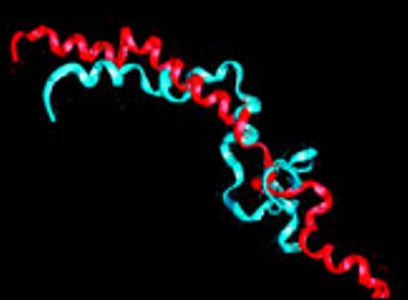
CERE-120 carries the gene for neurturin
(NTN), a naturally occurring protein that is claimed to repair damaged
dopamine-secreting neurons, and restoring normal function. CERE-120 is
injected in to the affected area of the brain. Clinical trials for
CERE-120 were being financially assisted by the Michael J. Fox Foundation.
However, CERE-120 has been found in
those clinical trials to have no effect. There was no difference between
those patients being treated and those
not being treated. For more information go to the
Complete news release
 CERE-120 is of
the
same type of substance as GDNF, which during contentious clinical trials
several years ago was claimed to be
ridding people of Parkinson's Disease, even though those that achieved the
greatest "benefit" were later found to be taking only a placebo. GDNF also
failed subsequent clinical trials. Medical researchers have been claiming
for decades that the use of gene therapy and "the unique healing
properties of neurotrophic factors" such as CERE-120 and GDNF would be
able to rid people of Parkinson's Disease. However, failed clinical trials
have proven the entire approach to be ineffective. CERE-120 is of
the
same type of substance as GDNF, which during contentious clinical trials
several years ago was claimed to be
ridding people of Parkinson's Disease, even though those that achieved the
greatest "benefit" were later found to be taking only a placebo. GDNF also
failed subsequent clinical trials. Medical researchers have been claiming
for decades that the use of gene therapy and "the unique healing
properties of neurotrophic factors" such as CERE-120 and GDNF would be
able to rid people of Parkinson's Disease. However, failed clinical trials
have proven the entire approach to be ineffective.
26th November 2008 - New research
THE ROLE OF THE PARKIN GENE IN WORSENING PARKINSON'S
DISEASE
Journal of Cell Biology [2008] Nov 24. [Epub ahead of print] (Narendra D,
Tanaka A, Suen DF, Youle RJ.)
Complete abstract
The primary fault in Parkinson's Disease is the insufficient formation of
dopamine. When dopamine fails to form properly the highly damaging
superoxide anion is formed instead. For more information go to the
Biochemistry of Parkinson's Disease under Cell Damage. This can cause
further deterioration in Parkinson's Disease. Although cell damage is
widely claimed to cause Parkinson's Disease, it is more accurate to say
that Parkinson's Disease can cause cell damage that can worsen already
existing Parkinson's Disease. Cell damage perpetuates far more when there
is a genetic lack of the Parkin gene. Those people with this genetic
disorder are consequently known to be more
susceptible to developing
Parkinson's Disease than any of the various genetic causes of Parkinson's
Disease. It makes Parkinson's Disease more likely rather than inevitable. Parkin is known to help rid damaged
elements in
the cells involved in
Parkinson's Disease.
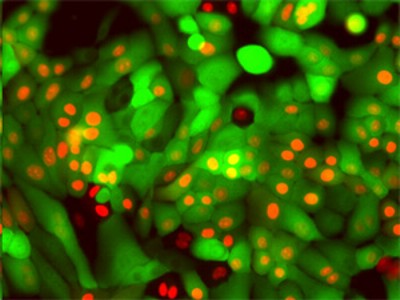 Although the role of Parkin in cell maintenance was
unknown, recent work has linked Parkin to the regulation of mitochondria.
The mitochondria is the energy producing part of cells. New research has
shown that the Parkin gene is selectively involved in getting rid of
dysfunctional mitochondria after it has been damaged due to Parkinson's
Disease. Parkin mediates the engulfment of mitochondria, and then its
elimination. When this fails to occur, as it does in the Parkin form of
genetic Parkinson's Disease, damaged elements within the nerve cells
accumulate and cause the functioning of those nerve cells to deteriorate
even further. Although the role of Parkin in cell maintenance was
unknown, recent work has linked Parkin to the regulation of mitochondria.
The mitochondria is the energy producing part of cells. New research has
shown that the Parkin gene is selectively involved in getting rid of
dysfunctional mitochondria after it has been damaged due to Parkinson's
Disease. Parkin mediates the engulfment of mitochondria, and then its
elimination. When this fails to occur, as it does in the Parkin form of
genetic Parkinson's Disease, damaged elements within the nerve cells
accumulate and cause the functioning of those nerve cells to deteriorate
even further.
15th November 2008 - History
ADOLF HITLER AND PARKINSON'S DISEASE
The
Nazi leader, Adolf
Hitler, was known to have Parkinson's Disease from 1933 until his suicide
in 1945
[reference].
At the end of the Second World War he was largely confined to his bunker
in Berlin. In his final days in the bunker, he shuffled around his room,
mumbling to himself, repeating the same phrases, sometimes pointing to his
hand and saying repeatedly, "Look it is getting better". It's not
trembling so much, and I can keep it still".
 He had trembling hands and
stooped shoulders. The stoop may have been due in part to a lack
of exercise. He also had tremor in his left leg. The right arm
trembled more than the left. With his hand extended and fingers spread he
did
not tremor. His shaking was related to emotional upsets. When the military situation
became far worse his left hand tremor was stronger. At the end he had a
stooped back, could barely walk, a
shuffling gait, his right leg was dragging, he had head shaking. His
left hand violently trembled on a limply dangling arm. Physically, he had
quickly deteriorated and developed the appearance of an old man. The Nazi
hierarchy had tried to conceal his Parkinson's Disease by all
means.
There are two films of Adolf Hitler's last public appearance,
one that was shown in which he displayed no symptoms of Parkinson's Disease, and
another that was not shown in which he was displaying the symptoms of
Parkinson's Disease. He had trembling hands and
stooped shoulders. The stoop may have been due in part to a lack
of exercise. He also had tremor in his left leg. The right arm
trembled more than the left. With his hand extended and fingers spread he
did
not tremor. His shaking was related to emotional upsets. When the military situation
became far worse his left hand tremor was stronger. At the end he had a
stooped back, could barely walk, a
shuffling gait, his right leg was dragging, he had head shaking. His
left hand violently trembled on a limply dangling arm. Physically, he had
quickly deteriorated and developed the appearance of an old man. The Nazi
hierarchy had tried to conceal his Parkinson's Disease by all
means.
There are two films of Adolf Hitler's last public appearance,
one that was shown in which he displayed no symptoms of Parkinson's Disease, and
another that was not shown in which he was displaying the symptoms of
Parkinson's Disease.
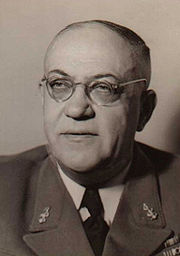
Hitler was treated by his personal physician,
Dr Theo Morrell.
Theo Morell was well known in Germany for his unconventional,
holistic and alternative treatments. Dr Morell kept very detailed diaries
of his treatment of Hitler's Parkinson's Disease. For more details see the
The Secret diaries of Hitler's Doctor. This is the
complete
book.
Hitler was
being
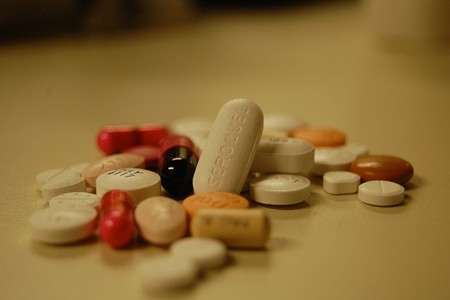
given 28 different
pills a day along with numerous injections every few hours. Dr Morell
saw Hitler every
day, sometimes 2 or 3 times daily.
 Field Marshall Gerd von Rundstedt described Hitler as constantly
fumbling
with Vitamultin tablets or "whatever junk Morell had given him".
Hitler was also a vegetarian, drank no alcohol, didn't smoke, and drank
decaffeinated coffee. Dr Morell
made an attempt at temporarily influencing Hitler's Parkinson's Disease by
subcutaneous injections of Harmin (a MAO inhibitor) - one drop, then one drop, then two drops,
and by administering one drop of Homburg 680 (an anti-cholinergic) - am, midday, evening. On April 22nd, 1945 Hitler dismissed Morell from his bunker in Berlin, saying that he didn't need any more
medical help. Dr Morell's methods still continued after he went, because
he left behind a lot of pre-prepared medicines, including those for
Parkinson's Disease. However, just a week later, Hitler was dead. Field Marshall Gerd von Rundstedt described Hitler as constantly
fumbling
with Vitamultin tablets or "whatever junk Morell had given him".
Hitler was also a vegetarian, drank no alcohol, didn't smoke, and drank
decaffeinated coffee. Dr Morell
made an attempt at temporarily influencing Hitler's Parkinson's Disease by
subcutaneous injections of Harmin (a MAO inhibitor) - one drop, then one drop, then two drops,
and by administering one drop of Homburg 680 (an anti-cholinergic) - am, midday, evening. On April 22nd, 1945 Hitler dismissed Morell from his bunker in Berlin, saying that he didn't need any more
medical help. Dr Morell's methods still continued after he went, because
he left behind a lot of pre-prepared medicines, including those for
Parkinson's Disease. However, just a week later, Hitler was dead.
12th November 2008 - New research
CEASING DOPAMINERGIC DRUGS IN ADVANCED
PARKINSON'S DISEASE
Journal of the American Medical Directors
Association [2008] 9 (9) : 670-675 (Tse W, Frisina PG, Halbig TD, Gracies
JM, Liang L, Tarshish C, Lesser G, Neufeld R, Koller WC, Libow LS.)
Complete abstract
There is a biochemical reaction to dopaminergic drugs, which causes them
to have an opposite after effect. L-dopa causes somebody to produce
even less of their own dopamine. Dopamine agonists eventually cause the
dopamine receptors to become less sensitive. Researchers determined the
effects of dopaminergic medication withdrawal in advanced Parkinson's
Disease. Patients were divided between those that continued with L-dopa,
and those that
ceased
the use of L-dopa.
 Those patients who completely ceased their use of
L-dopa actually showed no difference from those that did not. Overall, no
significant changes were observed between the control and experimental
groups in cognitive, behavioural, and motor functions. Of interest, some
of the drug withdrawal patients actually showed modest improvements in
cognitive function. The researchers consequently suggest that in patients
with advanced Parkinson's Disease and dementia, dopaminergic medication
withdrawal may be a feasible way to reduce the use of multiple drugs, and
potential medication-related side effects, with a minimal risk of
worsening motor deterioration. Those patients who completely ceased their use of
L-dopa actually showed no difference from those that did not. Overall, no
significant changes were observed between the control and experimental
groups in cognitive, behavioural, and motor functions. Of interest, some
of the drug withdrawal patients actually showed modest improvements in
cognitive function. The researchers consequently suggest that in patients
with advanced Parkinson's Disease and dementia, dopaminergic medication
withdrawal may be a feasible way to reduce the use of multiple drugs, and
potential medication-related side effects, with a minimal risk of
worsening motor deterioration.
9th November 2008 - New research
POWER LINES AFFECT NEUROLOGICAL DISORDERS
American Journal of Epidemiology [2008] Nov
5; [Epub ahead of print] (Huss A, Spoerri A, Egger M, Roosli M; for the
Swiss National Cohort Study.)
Complete abstract
Residence near power lines has been shown to increase the likelihood of
certain neurological disorders. The relationship between residential
magnetic field exposure from power lines and mortality from
neurodegenerative conditions was analyzed among nearly 5 million people.
Overall, the adjusted likelihood of mortality in Alzheimer's
Disease
in
people living
within 50m of a 220-380 kV power line was
1.24 times greater compared with persons who lived at a distance of
600m or more.
 Alzheimer's Disease and
dementia tend to increase in likelihood as Parkinson's Disease progresses.
The number of years somebody lives near near
power lines also increases the risk of mortality in Alzheimer's Disease.
People living at least 5 years within 50m of power lines had an increased
likelihood of 1.51 times normal, which increases to 1.78 times after 10
years of living near power lines. The likelihood doubled after 15 years of
living near power lines. The pattern was similar for senile dementia.
However, there was little evidence of increased mortality in Parkinson's
Disease. Alzheimer's Disease and
dementia tend to increase in likelihood as Parkinson's Disease progresses.
The number of years somebody lives near near
power lines also increases the risk of mortality in Alzheimer's Disease.
People living at least 5 years within 50m of power lines had an increased
likelihood of 1.51 times normal, which increases to 1.78 times after 10
years of living near power lines. The likelihood doubled after 15 years of
living near power lines. The pattern was similar for senile dementia.
However, there was little evidence of increased mortality in Parkinson's
Disease.
5th November 2008 - News release
NEW DOSAGES OF STALEVO
One of the major problems in medicine is
inappropriate dosages. Either dosages are insufficient to rid symptoms, or
more commonly are excessive. Excessive dosages can be tempting because
they can completely rid symptoms. However, they often cause a biochemical
reaction called "feedback inhibition". Feedback inhibition causes the body
to counteract the effect of any drug by reducing the very same function
that the drug is attempting to increase. Consequently, excessive dosages
can eventually cause the same medical problem it is
attempting to treat. Dopamine is produced naturally in the brain. For more
information go to the
Biochemistry of Parkinson's Disease. Parkinson's Disease drugs greatly
interfere with this natural formation of dopamine.
Stalevo consists of L-dopa and Carbidopa (as
does Sinemet), and also Entacapone, which prolongs their effect. It is
seen by many as a more effective drug than Sinemet. New dosages of Stalevo
have been approved for use in the
U.S.A.. The approval of Stalevo 75 and 125 tablets (18.75 mg carbidopa, 75
mg levodopa, 200 mg entacapone and
 31.25
mg carbidopa, 125 mg levodopa, 200 mg entacapone, respectively) provides
physicians with options that may enable more customized approaches to
treating people with Parkinson�s Disease. This enables them to avoid
dosages that are excessive to the patients needs. These new dosage
strengths complement the already existing Stalevo 50, 100, 150 and 200
tablets. For more information go to the
Complete article. 31.25
mg carbidopa, 125 mg levodopa, 200 mg entacapone, respectively) provides
physicians with options that may enable more customized approaches to
treating people with Parkinson�s Disease. This enables them to avoid
dosages that are excessive to the patients needs. These new dosage
strengths complement the already existing Stalevo 50, 100, 150 and 200
tablets. For more information go to the
Complete article.
The U.S. patents for Stalevo have been
challenged. The challenger, Wockhardt, has filed a new drug-marketing
application based on this challenge, that would enable them to produce and
market a generic version of Stalevo in 12.5, 200 and 50 mg strengths. For
more information go to the
Complete article.
|
.gif)
.gif)