|
JUNE 2008
28th June 2008 - New research
ONE OF THE WORLD'S LOWEST PREVALENCES OF PARKINSON'S
DISEASE
Movement Disorders [2008]
Jun 25; [Epub ahead of print] (Dotchin C, Msuya O, Kissima J, Massawe J, Mhina
A, Moshy A, Aris E, Jusabani A, Whiting D, Masuki G, Walker R.)
Complete abstract
The prevalence of Parkinson's
Disease varies worldwide from 7 to 407 people per 100,000.
For more information
go to
Prevalence
of Parkinson's Disease. The
prevalence of Parkinson's Disease
appears to be low in sub-Saharan
Africa,
but little data exists. So the authors conducted a study of the prevalence of
Parkinson's Disease in rural
Tanzania.
 Crude prevalence rates were
found to be very low : 30/100,000 (for men), 11/100,000 (for women) and 20/100,000 (overall). This
makes Tanzanian women the second least likely group of people in the world to develop
Parkinson's Disease.
This is despite rural Tanzania having very low levels of healthcare. It is in
stark contrast to the U.S.A., where, despite extensive healthcare, people are 30
times more likely to develop Parkinson's Disease. Tanzanian women also have the
world's lowest ratio of women to men having Parkinson's Disease, with the women
being nearly a third less likely to develop Parkinson's Disease than men. No explanation
is given for such low prevalence rates of Parkinson's Disease amongst Tanzanian
women. Crude prevalence rates were
found to be very low : 30/100,000 (for men), 11/100,000 (for women) and 20/100,000 (overall). This
makes Tanzanian women the second least likely group of people in the world to develop
Parkinson's Disease.
This is despite rural Tanzania having very low levels of healthcare. It is in
stark contrast to the U.S.A., where, despite extensive healthcare, people are 30
times more likely to develop Parkinson's Disease. Tanzanian women also have the
world's lowest ratio of women to men having Parkinson's Disease, with the women
being nearly a third less likely to develop Parkinson's Disease than men. No explanation
is given for such low prevalence rates of Parkinson's Disease amongst Tanzanian
women.
26th June 2008 - New research
THE PREVALENCE OF PATHOLOGICAL GAMBLING IN PARKINSON'S
DISEASE
Journal of Gambling Studies 2008
Jun 17; [Epub ahead of print] (Crockford D, Quickfall J, Currie S, Furtado S,
Suchowersky O, El-Guebaly N.)
Complete abstract
Pathological gambling has often
been identified in people with Parkinson's Disease treated with dopamine
agonists. When somebody takes dopamine agonists such as Ropinirole (Requip) and
Pramipexole (Mirapex), they disproportionately stimulate the D3 dopamine
receptor, far more than L-dopa does. This causes arousal in the limbic system,
which is where the D3 dopamine receptor is primarily located. Given that the
limbic system is
connected
with the pleasure centre, the use of certain dopamine agonists can especially
lead to compulsions such as gambling.
 This study was undertaken to establish the
prevalence of pathological gambling in Parkinson's Disease. The prevalence was
found to be nearly 10% of people with Parkinson's Disease. This meant that
pathological gambling was more than 5 times more likely than in people that
didn't have Parkinson's Disease. The increased prevalence of pathological
gambling in the Parkinson's Disease group was related to dopamine agonist use
and also younger age. Most people suffering from pathological gambling reported that
their gambling increased after diagnosis and starting treatment. This study was undertaken to establish the
prevalence of pathological gambling in Parkinson's Disease. The prevalence was
found to be nearly 10% of people with Parkinson's Disease. This meant that
pathological gambling was more than 5 times more likely than in people that
didn't have Parkinson's Disease. The increased prevalence of pathological
gambling in the Parkinson's Disease group was related to dopamine agonist use
and also younger age. Most people suffering from pathological gambling reported that
their gambling increased after diagnosis and starting treatment.
25th June 2008 - New research
DYSKINESIA IS RELATED TO WEIGHT
European Journal of Neurology
[2008] 15 (5) : 493-496 (Sharma JC, Ross IN, Rascol O, Brooks D.)
Complete abstract
L-dopa dose per kilogram body
weight is reported to be a significant factor for dyskinesia in Parkinson's
disease. This study investigated this hypothesis. Analysis of L-dopa therapy
patients revealed that people with dyskinesia had received significantly higher
L-dopa dose, and also had a higher L-dopa dose per kilogram body weight.
 The most
significant factor was the higher L-dopa
dose per kilogram body weight. Younger age was the factor that was the second
most related to dyskinesia. Gender, absolute L-dopa dose, weight on its own,
disease duration, and initial motor Unified Parkinson's disease rating score
were not significant. Higher L-dopa dose per kilogram body weight is an
independently significant factor for developing dyskinesia. This relationship
should be considered as an important factor when aiming to prevent and manage dyskinesia, because those of a lower
weight will be far more prone to dyskinesia. The most
significant factor was the higher L-dopa
dose per kilogram body weight. Younger age was the factor that was the second
most related to dyskinesia. Gender, absolute L-dopa dose, weight on its own,
disease duration, and initial motor Unified Parkinson's disease rating score
were not significant. Higher L-dopa dose per kilogram body weight is an
independently significant factor for developing dyskinesia. This relationship
should be considered as an important factor when aiming to prevent and manage dyskinesia, because those of a lower
weight will be far more prone to dyskinesia.
24th June 2008 - New research
CHRONIC PAIN IN PARKINSON'S DISEASE
Mvement Disorders [2008] Jun 10; [Epub
ahead of print] (Negre-Pages L, Regragui W, Bouhassira D, Grandjean H, Rascol O)
Complete abstract
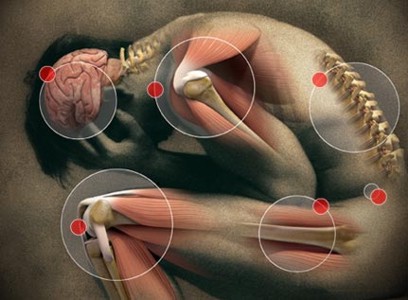
Pain is a frequent, but poorly
studied symptom of Parkinson's Disease. This survey aimed to assess the
prevalence of chronic pain in Parkinson's Disease, to describe Parkinson's
Disease patients with chronic pain, and to record analgesic consumption. 62% of
people with Parkinson's Disease were found to suffer from chronic pain. 26% of
people with Parkinson's Disease had pain unrelated to Parkinson's Disease
("non-PD-pain", caused mainly by
osteoarthritis), while 39% had chronic pain related to Parkinson's Disease
("PD-pain").
 In this last group,
Parkinson's
Disease was the sole cause of pain in the majority, whilst the others suffered
from indirectly aggravated pain of another
origin, which was mainly osteoarthritis. Parkinsonian patients with "PD-pain"
were younger at Parkinson's Disease onset, had more motor complications, more
severe depressive symptoms than those without pain or with "non-PD pain."
"PD-pain" was more intense, but was less frequently reported to doctors, and was
associated with less frequent analgesic consumption than "non-PD-pain." Pain was
twice more frequent in Parkinson's Disease patients than in patients without
Parkinson's Disease. Chronic pain is frequent but underreported in Parkinson's
Disease. In this last group,
Parkinson's
Disease was the sole cause of pain in the majority, whilst the others suffered
from indirectly aggravated pain of another
origin, which was mainly osteoarthritis. Parkinsonian patients with "PD-pain"
were younger at Parkinson's Disease onset, had more motor complications, more
severe depressive symptoms than those without pain or with "non-PD pain."
"PD-pain" was more intense, but was less frequently reported to doctors, and was
associated with less frequent analgesic consumption than "non-PD-pain." Pain was
twice more frequent in Parkinson's Disease patients than in patients without
Parkinson's Disease. Chronic pain is frequent but underreported in Parkinson's
Disease.
15th June 2008 - New book
PARKINSON'S DISEASE AND MOVEMENT DISORDERS
TN Mehrotra
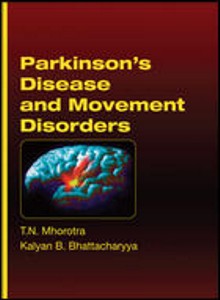 A
concise, practical overview of Parkinson's Disease and other movement
disorders and their management. It lays out disease epidemiology and
pathology, symptoms and signs, features, approaches, fluctation function,
pharmacokinetic strategies, and a detailed description of the disease
through subjective treatment at various levels. Includes the latest
information on the diagnosis and treatment of Parkinson's Disease. Focuses
on the long-term care of patients suffering from movement disorders.
Begins with a historical perspective on the evolution of treatment for
movement disorders. Discusses special issues of the disease such as sleep,
depression and dementia, and young onset.
Click here for more details. A
concise, practical overview of Parkinson's Disease and other movement
disorders and their management. It lays out disease epidemiology and
pathology, symptoms and signs, features, approaches, fluctation function,
pharmacokinetic strategies, and a detailed description of the disease
through subjective treatment at various levels. Includes the latest
information on the diagnosis and treatment of Parkinson's Disease. Focuses
on the long-term care of patients suffering from movement disorders.
Begins with a historical perspective on the evolution of treatment for
movement disorders. Discusses special issues of the disease such as sleep,
depression and dementia, and young onset.
Click here for more details.
13th June 2008 - History
AN ESSAY ON THE SHAKING PALSY
James Parkinson
Although Parkinson's Disease has been known
of for thousands of years, the first formal description of Parkinson's
Disease was in "An essay of the Shaking Palsy", which was written in 1817
by James Parkinson. Parkinson's Disease
was
eventually named after James Parkinson.
 James Parkinson
systematically described the medical
history of six
individuals who had symptoms of the disease.
Unusually for such a description, he did not actually examine all these patients
himself but observed them on daily walks.
The purpose of his essay was to
document the symptoms of the disorder, which he described as
"Involuntary tremulous motion, with lessened muscular power, in parts not in
action and even when supported; with a propensity to bend the trunk
forwards, and to pass from a walking to a running pace : the senses and
intellect being uninjured." For the full text go to
"An Essay on the
Shaking Palsy," James Parkinson
systematically described the medical
history of six
individuals who had symptoms of the disease.
Unusually for such a description, he did not actually examine all these patients
himself but observed them on daily walks.
The purpose of his essay was to
document the symptoms of the disorder, which he described as
"Involuntary tremulous motion, with lessened muscular power, in parts not in
action and even when supported; with a propensity to bend the trunk
forwards, and to pass from a walking to a running pace : the senses and
intellect being uninjured." For the full text go to
"An Essay on the
Shaking Palsy,"
11th June 2008 - New review
PARKINSON'S DISEASE ORGANISATIONS
Most countries have one or more organisations specifically
for assisting people with Parkinson's Disease in those countries. The web sites or
the contact
details of most of the national Parkinson's Disease organisations are
on the World Parkinson Disease Association
web site, or on the web site of the European Parkinson's Disease
Association.
 The
U.S.A. has four major organisations : the American Parkinson Disease
Foundation, the Parkinson's Disease Foundation, the National Parkinson Foundation, and
The Michael J.Fox Foundation.
For links to all the national and international Parkinson's Disease
organisations around the world, go to
Parkinson's Disease organisations If you would like details for
a particular country that is not listed, please e-mail
[email protected]. The
U.S.A. has four major organisations : the American Parkinson Disease
Foundation, the Parkinson's Disease Foundation, the National Parkinson Foundation, and
The Michael J.Fox Foundation.
For links to all the national and international Parkinson's Disease
organisations around the world, go to
Parkinson's Disease organisations If you would like details for
a particular country that is not listed, please e-mail
[email protected].
9th June 2008 - New review
CARBON MONOXIDE AS A CAUSE OF PARKINSON'S
DISEASE
Carbon monoxide toxicity is
frequent due to the formation of carbon monoxide by very common means such as
gas cookers and exhaust fumes. However, despite carbon monoxide toxicity often
being cited as a cause of Parkinson's Disease, it rarely actually results in
Parkinson's Disease. It normally requires the person having gone in to a coma as
a result of the carbon monoxide poisoning before symptoms of Parkinson's Disease
develop.
Common means : Motor vehicle
exhaust fumes, cigarette smoke. It also forms when fuels like coal, paraffin,
natural gas, oil or wood, and especially natural gas, do not burn completely in
appliances such as heaters, furnaces, stoves, water heaters, and ovens.
Means of toxicity : Carbon
monoxide causes hemoglobin, which transports oxygen, to turn in to carboxy-hemoglobin,
which does not transport oxygen. Oxygen is required for the formation of L-dopa.
So carbon monoxide may cause Parkinson's Disease symptoms by interfering with
the availability of oxygen to the brain. However, the precise means by which it
causes Parkinson's Disease has still not been proven.
 Symptoms : A Parkinsonian state with
behavioural and cognitive impairment but could walk, or progressed further
to an akinetic-mute state, and were bed-bound
[1]. Parkinson's
Disease symptoms such as tremor and rigidity were experienced in only a
small number of people
[2]. Delayed onset
of Parkinsonsim in some people from which they recovered
[3]. In a small
proportion of people, Parkinsonian symptoms occurred, such as gait
disturbance, impaired mentality, urinary incontinence, and mutism. The
most frequent signs were short-step gait, hypokinesia, masked face,
increased muscle tone (rigidity), glabella sign, grasp reflex, and
retropulsion. Intentional tremor was occasionally found, but resting
tremor could not be seen
[4]. Symptoms : A Parkinsonian state with
behavioural and cognitive impairment but could walk, or progressed further
to an akinetic-mute state, and were bed-bound
[1]. Parkinson's
Disease symptoms such as tremor and rigidity were experienced in only a
small number of people
[2]. Delayed onset
of Parkinsonsim in some people from which they recovered
[3]. In a small
proportion of people, Parkinsonian symptoms occurred, such as gait
disturbance, impaired mentality, urinary incontinence, and mutism. The
most frequent signs were short-step gait, hypokinesia, masked face,
increased muscle tone (rigidity), glabella sign, grasp reflex, and
retropulsion. Intentional tremor was occasionally found, but resting
tremor could not be seen
[4].
8th June 2008 - New research
OLFACTORY MUCOSA IS A SOURCE OF STEM CELLS
Stem Cells [2008] Jun 5; [Epub
ahead of print] (Murrell W, Wetzig A, Donnellan M, Feron F, Burne T, Meedeniya
A, Kesby J, Bianco J, Perry C, Silburn P, Mackay-Sim A.)
Complete abstract
It has been claimed for years that stem cells could replace the cells that are
supposed to be lost in Parkinson's Disease. The main hindrance to stem cell
research being carried out has been the ethical objections to the type of
cells
often used, because some have involved the use of early forms of human life.
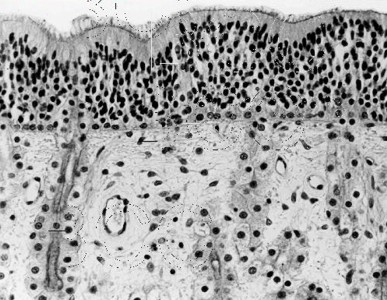 This research showed that stem cells can be grown from the olfactory mucosa
instead - even in people with Parkinson's disease. The olfactory mucosa are in
the olfactory organ (inside the nose). For more information go to
Olfactory mucosa. These cells proliferated and generated dopaminergic cells
in vitro. They also generated dopaminergic cells when transplanted into the
brain. The authors claim that this suggests that people with Parkinson's Disease
could use their own olfactory mucosa to provide their own source of stem cells
in order to be used in themselves. This research showed that stem cells can be grown from the olfactory mucosa
instead - even in people with Parkinson's disease. The olfactory mucosa are in
the olfactory organ (inside the nose). For more information go to
Olfactory mucosa. These cells proliferated and generated dopaminergic cells
in vitro. They also generated dopaminergic cells when transplanted into the
brain. The authors claim that this suggests that people with Parkinson's Disease
could use their own olfactory mucosa to provide their own source of stem cells
in order to be used in themselves.
However, no published research
has ever shown that there is massive cell loss in Parkinson's Disease. Studies
that claim this have instead shown that there is a reduced ability to produce
dopamine in the existing cells. So the scientific theory behind the use of stem
cells, of any kind, in Parkinson's Disease has always been fundamentally flawed.
This is why despite stem cell operations now taking place around the world,
never have they resulted in the ridding of Parkinson's Disease.
5th June 2008 - News release
NEUPRO HAS TO BE REFRIGERATED
Neupro (rotigotine), is a dopamine agonist
formulated in a transdermal delivery system. For more information go to
Neupro. A lot of
Neupro recently had to be withdrawn from use in the U.S.A.. The manufacturers
have now announced that they will submit a variation to the EMEA (European
Medicines Evaluation Agency) to implement a full cold-chain storage and
distribution system for Neupro in Europe. UCB will also be replacing current
Neupro supply in Europe with product that has been refrigerated since
manufacture. Refrigerated storage of Neupro
substantially
reduces the development of crystals, which
can result from the manufacturing process.
 Crystallisation in the patch can lead
to a change in its appearance and could reduce its clinical efficacy, but it is
of no clinical relevance in most instances. All Neupro supply should be stored
in a refrigerator. There is no need for patients to transport Neupro patches in
special containers, or to store it in a freezer compartment. In agreement with
the EMEA, and in order to prioritise the supply of Neupro for existing patients,
new patients will not be initiated on Neupro. Therapy must not be discontinued
abruptly, because abrupt withdrawal of dopamine agonists has been associated
with a syndrome resembling neuroleptic malignant syndrome or akinetic crises.
For more information
go to the
Complete article. Crystallisation in the patch can lead
to a change in its appearance and could reduce its clinical efficacy, but it is
of no clinical relevance in most instances. All Neupro supply should be stored
in a refrigerator. There is no need for patients to transport Neupro patches in
special containers, or to store it in a freezer compartment. In agreement with
the EMEA, and in order to prioritise the supply of Neupro for existing patients,
new patients will not be initiated on Neupro. Therapy must not be discontinued
abruptly, because abrupt withdrawal of dopamine agonists has been associated
with a syndrome resembling neuroleptic malignant syndrome or akinetic crises.
For more information
go to the
Complete article.
4th June 2008 - New book
Monkeys
in the Middle
Nick Nelson
 "Monkeys
in the Middle : How One Drug Company Kept a Parkinsons Disease Breakthrough Out
of Reach". Some claimed it was a miracle drug. Others called it the cure. A drug
known simply as "GDNF" seemed to be reversing the effects of Parkinson's
disease. The miracle ended in 2004 when Amgen halted clinical trials of GDNF and
denied access to the drug, due to the results of toxicity studies. Nick Nelson
recounts the story of the patients who took on the world's biggest biotechnology
company for the right to continue using GDNF.
Click here for more details.
Despite the claims of being cured, some of the patients claiming the greatest
benefit had actually been taking a placebo. A subsequent and more recent
independent clinical trial showed no benefit from the use of GDNF. "Monkeys
in the Middle : How One Drug Company Kept a Parkinsons Disease Breakthrough Out
of Reach". Some claimed it was a miracle drug. Others called it the cure. A drug
known simply as "GDNF" seemed to be reversing the effects of Parkinson's
disease. The miracle ended in 2004 when Amgen halted clinical trials of GDNF and
denied access to the drug, due to the results of toxicity studies. Nick Nelson
recounts the story of the patients who took on the world's biggest biotechnology
company for the right to continue using GDNF.
Click here for more details.
Despite the claims of being cured, some of the patients claiming the greatest
benefit had actually been taking a placebo. A subsequent and more recent
independent clinical trial showed no benefit from the use of GDNF.
3rd June 2008 - New research
functional electrical stimulation (FES)
Neuromodulation [2008] 11 (2) : 143-149 (G.E.Mann,
S.M.Finn, P.N.Taylor)
Complete abstract
The use of electrical impulses
to stimulate weak or paralyzed muscles, called Functional Electrical Stimulation
(FES), is often used to help stroke or multiple sclerosis patients to walk.
For more information
go to
Functional electrical stimulation.
Many people with Parkinson�s are prone to tripping and falling because they have
difficulty picking up their feet consistently. They also can have difficulty
with starting and maintaining walking. This study aimed to investigate the
effect of Functional Electrical Stimulation (FES)
on walking ability in people with
Parkinson's
disease.
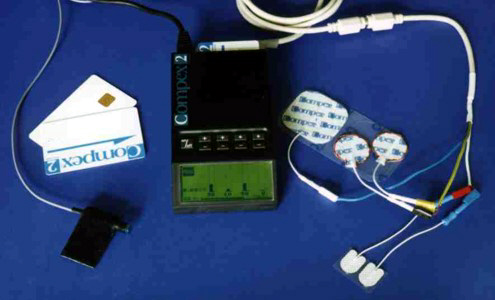 People with idiopathic Parkinson's disease received electrical
stimulation for eight weeks to the common peroneal nerve to improve heel strike
and provide sensory stimulus during walking. An immediate improvement was
demonstrated with FES on distance and average stride length during a short walk
during the treatment period, but not on the number of steps and walking speed
during a longer walk. A training effect was observed for all measures of walking
ability. Fewer falls and episodes of freezing occurred during the treatment
period. The number of falls returned to
pre-treatment levels when treatment was stopped. People with idiopathic Parkinson's disease received electrical
stimulation for eight weeks to the common peroneal nerve to improve heel strike
and provide sensory stimulus during walking. An immediate improvement was
demonstrated with FES on distance and average stride length during a short walk
during the treatment period, but not on the number of steps and walking speed
during a longer walk. A training effect was observed for all measures of walking
ability. Fewer falls and episodes of freezing occurred during the treatment
period. The number of falls returned to
pre-treatment levels when treatment was stopped.
2nd June 2008 - News release
NTF (Neurotrophic
Factor Cells)
Trophic factors are proteins
that support and protect cells. A number of them have been reported to act on
dopaminergic neurons, the cells whose reduced activity causes Parkinson's
Disease. Consequently, it has been claimed that they are potential therapeutic
candidates for Parkinson's Disease. BrainStorm Cell Therapeutics is a leading
developer of adult stem cell technologies and therapeutics.
BrainStorm's NTF cells are generated from adult
human bone marrow derived stem cells.
Brainstorm announced that, in a pre-clinical study,
Parkinson's Disease symptoms in rats improved following transplantation of
Neurotrophic Factor Cells (NTF). The levels of dopamine were also increased. This is the second study completed using
BrainStorm's cells that has produced similar results.
 According
to BrainStorm, "The study indicates that our cells show survival, integration
and clinical efficacy. When considering the advantages of using adult stem
cells, which are easy to harvest, autologous, do not create tumor problem and do
not present the moral / religious issues that are often discussed with embryonic
stem cells, we remain optimistic that we will soon be able to embark on clinical
trials in Parkinson's disease."
For more information
go to the
Complete article.
However,
the rats did not actually have Parkinson's Disease.
Their symptoms were induced using a toxin.
Also, the symptoms were only reduced rather than rid. When previously successful tests on GDNF, another trophic factor, were later
carried out on a larger scale in humans, they failed to have any effect at all. According
to BrainStorm, "The study indicates that our cells show survival, integration
and clinical efficacy. When considering the advantages of using adult stem
cells, which are easy to harvest, autologous, do not create tumor problem and do
not present the moral / religious issues that are often discussed with embryonic
stem cells, we remain optimistic that we will soon be able to embark on clinical
trials in Parkinson's disease."
For more information
go to the
Complete article.
However,
the rats did not actually have Parkinson's Disease.
Their symptoms were induced using a toxin.
Also, the symptoms were only reduced rather than rid. When previously successful tests on GDNF, another trophic factor, were later
carried out on a larger scale in humans, they failed to have any effect at all.
1st June 2008 - New research
DOING WITHOUT PARKINSON'S DISEASE DRUGS
Journal of Neurology
Neurosurgery and Psychiatry [2008] 79 (6) : 716-718 (Asimakopoulos P, Caslake R,
Harris CE, Gordon JC, Taylor KS, Counsell C.)
Complete abstract
Although L-dopa is the most widely used form of treating Parkinson's Disease, no
substance interferes with a person's capacity to produce their own dopamine than
L-dopa. Although dopamine agonists are commonly used to treat Parkinson's
Disease by stimulating dopamine receptors, they eventually become
counterproductive by making the dopamine receptors progressively less sensitive.
Due to the counterproductive after effect of common Parkinson's Disease drugs, the issue of
whether to adopt a "wait and watch" strategy or to initiate drug therapy
soon
after diagnosis in Parkinson's disease has been the subject of debate.
 People
who remained untreated were compared with patients who had been treated for
Parkinson's Disease, by assessing their progress after two years. Two common
symptom questionaires were used - the Unified Parkinson's Disease Rating Scale (UPDRS))
and self-reported health status (Parkinson's Disease Questionnaire (PDQ-39).
There was no significant deterioration in PDQ-39
score in either group. Given the lack of significant
deterioration in the PDQ-39 in untreated patients, the author's believe that
delaying the start of treatment remains a credible approach. People
who remained untreated were compared with patients who had been treated for
Parkinson's Disease, by assessing their progress after two years. Two common
symptom questionaires were used - the Unified Parkinson's Disease Rating Scale (UPDRS))
and self-reported health status (Parkinson's Disease Questionnaire (PDQ-39).
There was no significant deterioration in PDQ-39
score in either group. Given the lack of significant
deterioration in the PDQ-39 in untreated patients, the author's believe that
delaying the start of treatment remains a credible approach.
|
.gif)
.gif)