.gif) VIARTIS
|
||||||
|
PARKINSON'S DISEASE |
||||||
|
|
||||||
|
|
PARKINSON'S DISEASE NEWS
|
|
||||
|
MAY 2008 29th May 2008 - New clinical trial CLINICAL TRIAL OF SYN115 SYN-115 is a new type of drug being tested for Parkinson's Disease that does not act by directly increasing dopamine formation. SYN-115 is a potent and selective inhibitor of the A2A receptor, which modulates the production of dopamine, glutamine and serotonin in specific regions of the brain. In preclinical models of Parkinson's disease, A2A inhibition has resulted in increased levels of dopamine, resulting in the reversal of motor deficiencies. For more information go to SYN115. Synosia is initiating a Phase IIa clinical trial on SYN-115 and plans to start a Phase IIb study during 2008. While in this study, all participants will continue taking their routine Parkinson's Disease medication.
26th May 2008 - New review ROTENONE AS A CAUSE OF PARKINSON'S DISEASE Rotenone is a pesticide that can cause Parkinson's Disease by lowering dopamine levels. Pesticides are known to be associated with an increased rate of Parkinson's Disease [1].
Insecticides are also known to affect well water. Rotenone is commonly used in powdered form to treat parasitic mites on chickens and other fowl, and so can be found in poultry. It is also used to eradicate exotic fish from their non-native habitats. Rotenone is produced by extraction from the roots, seeds, and leaves of certain tropical legumes. People have been known to catch fish by extracting rotenone from plants and releasing it into water. Means of toxicity : Rotenone inhibits tyrosine hydroxylation, which is essential for the formation of dopamine. So Rotenone causes Parkinson's Disease by lowering dopamine levels [4]. Symptoms : The neurochemical, neuropathological and behavioural features of Parkinson's disease [5]; hypokinesia and rigidity [6].
24th May 2008 - New review MERCURY AS A CAUSE OF PARKINSON'S DISEASE Mercury toxicity from a wide variety of sources is a known cause of symptoms that include those of Parkinson's Disease, especially tremor. It does this by lowering dopamine levels.
Means of toxicity : One of the chief targets of the toxin is the enzyme pyruvate dehydrogenase (PDH). The enzyme is irreversibly inhibited by several mercury compounds. The lipoic acid component of the multienzyme complex binds mercury compounds tightly and thus inhibits PDH. However, the cause of the symptoms of Parkinson's Disease is likely to be due to the fact that mercury potently causes the release of dopamine, thereby lowering dopamine levels. Symptoms : Parkinson�s Disease [1]; tremor [2, 3]; hand tremor, balance and gait disturbance with bradykinesia, paresthesias of the upper extremities, neurobehavioral abnormalities, slight memory loss, and spatial disorientation. Psychoneurological examination revealed dementia, Parkinson's syndrome and ataxia of the lower limbs [4]; tremor, paralysis, and excessive salivation as well as tooth loss, skin problems, and pulmonary complaints [5]; fine hand tremor, depression, hypochondria symptoms, introvert behaviour, concentration difficulty, psychomotor, perceptual and motor co-ordination disturbances [6]; tremor, loss of memory, sleeplessness, metallic taste [7]; emotional changes (symptoms of depression and anxiety) and neurological changes (amnesia, insomnia and tremor of the tongue) [8]; impaired short term verbal and spatial memory, impaired sustained and divided attention, and impaired motor speed; elevated clinical levels of psychiatric symptomatology, including anxiety, depression and phobic avoidance, and neurological symptoms of tremor, weakness in the limbs, and excessive sweating [9]; intention tremor, dysdiado-chokinesis and mild rigidity [10]; tremor, reduced coordination ability [11].
22nd May 2008 - New research FATTY ACIDS REDUCE DEPRESSION IN PARKINSON'S DISEASE Journal of Affective Disorders 2008 May 14; [Epub ahead of print] (da Silva TM, Munhoz RP, Alvarez C, Naliwaiko K, Kiss A, Andreatini R, Ferraz AC.) Complete abstract Omega-3 fatty acids are, like vitamins, essential for health and cannot be biosynthesized. So they have to be consumed in the diet. Omega-3 fatty acids are present in high quantities in some oils, such as fish oil. For more information go to Omega-3 fatty acids. A degree of depression is very common in Parkinson's Disease. The effect of fish oil supplementation was assessed in people with Parkinson's Disease and depression. Changes in depression were measured using three scales : Montgomery-Asberg Rating Scale (MADRS), the Clinical Global Impressions Scale (CGI) and Beck Depression Inventory (BECK).
20th May 2008 - News release PROLONGED RELEASE ROPINIROLE
Clinical trials demonstrated that ropinirole prolonged-release tablets are effective and generally well-tolerated in the treatment of early and advanced Parkinson's Disease. Ropinirole prolonged-release produced a significant reduction in awake time spent "off" with no increase in troublesome dyskinesias during "on" time compared to placebo when used as an adjunct to L-dopa. GlaxoSmithKline has developed the ReQuip Patient Support Service (RPSS) to offer patients free guidance and support when they switch from ropinirole to ropinirole prolonged-release. For more information go to the Complete article.
18th May 2008 - New research THE COMPARISON OF TOLCAPONE AND ENTACAPONE CNS Neuroscience and Therapeutics [2008] 14 (1) : 83-93 (Lees AJ.) Complete abstract The COMT inhibitors Entacopone (Comtan) and Tolcapone prolong the effects of L-dopa, and so have been successfully used to complement the use of L-dopa. The relative efficacy of entacapone and tolcapone has not been adequately established. A recent analysis of 14 studies in over 2500 patients, conducted to assess the efficacy and safety of tolcapone and entacapone, found both to be statistically superior to placebo in increasing ON time and decreasing OFF time. Tolcapone was found to be greater in its effect than entacapone.
17th May 2008 - News report ATTITUDES TO THE USE OF STEM CELLS A huge survery was carried out in 15 countries on the knowledge of stem cell therapy and the attitudes to it, in: Austria, Czech Republic, Germany, Denmark, Spain, France, Ireland, Italy, Netherlands, Poland, United Kingdom, Sweden, U.S.A., Japan and Israel. The most knowledgeable were those in Sweden and Denmark, where 86% knew of stem cell research. Less than 45% of those in Poland, Austria, Israel and Japan even knew of it. Only about 40% to 50% of people had any real understanding of it. There was an even poorer understanding of how stem cells are extracted and the implications for the embryo, with U.S.A. at only 30%, being the most knowledegable. In most countries stem cell research was viewed as useful. However, there were considerable reservations about the risk of moral dilemnas. The Danish and Dutch believed there to the least risk. Americans, Austrians and Japanese were at the other extreme. Views regarding the morality of the use of stem cells differed a lot. It was viewed as immoral by a majority in the U.S.A., Austria, Germany, Poland, Japan, and Israel. Those countries disagreeing most with the claims of immorality were Denmark, Spain, the United Kingdom, and Italy.
16th May 2008 - New review
CYANIDE AS A CAUSE OF PARKINSON'S DISEASE Common sources : Cyanide is contained in drugs such as potassium cyanide and sodium cyanide. Cyanides can be produced by certain bacteria, fungi, and algae, and are found in a number of foods and plants. Cyanide occurs naturally in cassava roots (aka manioc), which are potato-like tubers of cassava plants grown in tropical countries; these must be processed prior to consumption (usually by extended boiling). Fruits that have a pit, such as cherries or apricots, often contain either cyanides or cyanogenic glycosides in the pit. Bitter almonds, from which almond oil and flavoring is made, also contain cyanide.
Means of toxicity : Cyanide interrupts the electron transport chain in the inner membrane of the mitochondrion because it binds more strongly than oxygen to the Fe3+ in cytochrome a3, preventing this cytochrome from combining electrons with oxygen. Cyanide also occupies the place of oxygen in hemoglobin (which transports oxygen). Oxygen is required for the formation of L-dopa. So carbon monoxide may cause Parkinson's Disease symptoms by interefering with the availability of oxygen to the brain. However, the precise means by which it causes Parkinson's Disease has still not been proven. Symptoms : Severe parkinsonian syndrome, characterized primarily by akinesia and rigidity [1]; Parkinsonism, that regressed slowly after the poisoning apart from dysarthria, bradykinesia of the upper limbs, and very brisk monosynaptic reflexes [2]; Progressive Parkinsonism, dystonia and apraxia of eye opening [3]; severe Parkinsonian syndrome [4]; a combination of severe parkinsonism and progressive dystonia [5]; severe parkinsonian symptoms, including profound micrographia and hypersalivation [6]; Parkinsonism that regressed slowly after the poisoning apart from dysarthria, bradykinesia of the upper limbs and very brisk monosynaptic reflexes [7]
12th May 2008 - New research
REIMPLANTATION GREATLY IMPROVES THE EFFECT OF
DBS SURGERY DBS is a surgical method of treating Parkinson's Disease that uses electrodes implanted into the brain. For more information go to Deep Brain Stimulation. The misplacement of electrodes is a possible explanation for a poor response to STN (bilateral subthalamic nucleus) stimulation in some people with Parkinson Disease after DBS surgery. A study was carried out to assess whether reimplantation of the electrodes could produce improvement in patients' symptoms.
10th May 2008 - New research
RHINORRHEA IS INCREASED IN PARKINSON'S
DISEASE Rhinorrhea is excessive liquid produced from the nose. For more information go to Rhinorrhea. Researchers found that rhinorrhea is increased in people with Parkinson's Disease, but only a single publication supported this observation. So they performed two further studies to assess the prevalence of rhinorrhea in Parkinson's Disease. They also questioned subjects as to whether rhinorrhea might be associated with olfactory impairment, which is known to be common in Parkinson's Disease.
9th May 2008 - New research MORTALITY RATES IN PARKINSON'S DISEASE Neurology [2008] 70 (16 Pt 2) : 1423-1430 (Driver JA, Kurth T, Buring JE, Gaziano JM, Logroscino G.) Complete abstract Over 20,000 people were assessed in order to evaluate the mortality rate in Parkinson disease. Over 500 of these people had Parkinson's Disease. Each person with Parkinson's Disease was matched with somebody who did not have Parkinson's Disease. Of those that died within 6 years, nearly 36% of those with Parkinson's Disease had died, in comparison to 23% of those people who did not have Parkinson's Disease.
The researchers only asked yes or no for general health conditions (such as cerebral vascular disease). So they could not know how serious each person's condition was. They could therefore have matched somebody who had Parkinson's Disease with somebody who did not have Parkinson's Disease, with the Parkinson's Disease patient having far more serious cerebral vascular disease than the person that did not have Parkinson's Disease. The researchers also accepted self-reporting to determine their more than 500 Parkinson's Disease subjects, despite Parkinson's Disease being a widely misdiagnosed condition. They did not do a SPECT, and do not state that they even did a clinical examination in order to asses whether the subjects had Parkinson's Disease.
8th May 2008 - New book the stranger comes at sundown : living and dying with Parkinson's DiseaseJane Kriete Awalt
7th May 2008 - New research
FOOD CONTAMINANTS INCREASE PARKINSON'S
DISEASE Neurology. 2008 Apr 15;70(16 Pt 2):1423-30. Related Articles, LinkOut This study aimed to investigate the association of Parkinson's Disease with dietary exposure to polychlorinated biphenyls (PCBs) and methylmercury (MeHg). Polychlorinated biphenyls have a wide range of industrial uses. For more information go to Polychlorinated biphenyls. They are known to be highly toxic and have caused large scale environmental contaminations, particularly in the U.S.A.. Polluting rivers caused fish to be contaminated. Polychlorinated biphenyls dumped in sewage plants was passed on as sludge to be used by farmers and gardeners, leading to contaminated food supplies. The community used to investigate the association were the Faeroe Islands, a Danish territory north of the British Isles. This is because the Faeroe Islands presently has the highest incidence of Parkinson's Disease, and because there is known to be increased exposure to polychlorinated biphenyls and methylmercury there.
6th May 2008 - New research THE ARABIC ORIGINS OF GENETIC PARKINSON'S DISEASE Movement Disorders [2008] Apr 28 [Epub ahead of print] (Benamer HT, de Silva R, Siddiqui KA, Grosset DG.) Complete abstract The present report systematically reviewed the medical literature concerning Parkinson's Disease in Arabs. Over twenty studies were used. The prevalence of Parkinson's Disease amongst Arabs was found to be only 27 to 43 people per 100,000. The prevalence amongst Americans is up to 10 times greater than that. The incidence of Parkinson's Disease amongst Arabs (the rate of diagnosis) is reported at 4.5 per 100,000 people per year. The incidence is up to 5 times greater amongst Americans. The reason for such very low levels in Arabs is unknown.
2nd May 2008 - History leonardo da vinci's descriptions of parkinson's diseaseThe Italian artist, engineer and scientist Leonardo da Vinci (1452-1519) also studied anatomy, physiology and medicine. Leonardo da Vinci kept secret notebooks in which he wrote and sketched his ideas and observations, in handwriting that only he could read. So keen was he to study the human body that he went out at night to dissect human corpses. For more information go to Leonardo da Vinci.
1st May 2008 - New research the cause of tremorJournal of Neurology Neurosurgery and Psychiatry [2008] 79 (5) : 514-521 (Plaha P, Filipovic S, Gill SS.) Complete abstract Precisely what happens in the brain when tremor occurs wass not clearly known. Researchers hypothesized that tremor in Parkinson's Disease occurs when two parts of the brain : the caudal zona incerta and the subthalamic nucleus are deprived of dopamine, and that they consequently become increasingly responsive to alpha and beta frequency oscillations. Oscillations are basically increases and decreases in stimulation. They tested their idea by stimulating the part of the brain they claimed to be responsible (the caudal zona incerta) with alpha and beta oscillations using deep brain stimulation (DBS) in people with Parkinson's Disease who did not have any tremor. DBS leads were also implanted in other sites within the brain.
|
||||||
|
|
||||||
.gif) |
||||||
| �2006-2008 Viartis | ||||||
| [email protected] | ||||||
 Images of the
brain, taken with an MRI, will be used to see if there are differences
in
response.
Memory tests and motor (movement) evaluations will also be used. The primary
symptoms assessed will be anxiety, depression, memory, and uncontrollable
movements (dyskinesia).
For full details of
the clinical trial go to the
Images of the
brain, taken with an MRI, will be used to see if there are differences
in
response.
Memory tests and motor (movement) evaluations will also be used. The primary
symptoms assessed will be anxiety, depression, memory, and uncontrollable
movements (dyskinesia).
For full details of
the clinical trial go to the
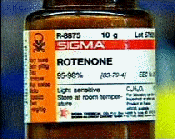 Common means : Rotenone is used
as an insecticide. There is a greatly increased likelihood of developing
symptoms by people involved in horticulture and agriculture
Common means : Rotenone is used
as an insecticide. There is a greatly increased likelihood of developing
symptoms by people involved in horticulture and agriculture
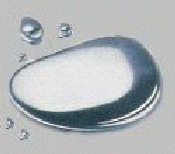 Sources of mercury :
dietary fish intake, ethnic over-the-counter medications, occupational exposures
to mercury vapour, possession of dental amalgam fillings, gold production, skin
ointment, some soaps.
Sources of mercury :
dietary fish intake, ethnic over-the-counter medications, occupational exposures
to mercury vapour, possession of dental amalgam fillings, gold production, skin
ointment, some soaps.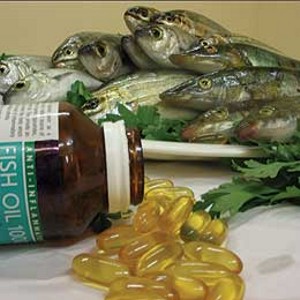 Patients given fish oil supplements showed a
significant reduction in depression on two of the three scales. In 42% of
patients, their symptom scores were more than halved. In 22% of patients, they
were rid of depression altogether. The authors do not explain how this
anti-depressant effect was obtained. It can not be by increasing dopamine
levels, because fatty acids are not involved in dopamine biosynthesis. Rather
than using fish oil supplements, Omega-3 fatty acids can be better supplied by
changing over to Canola oil (rapeseed oil) for use in frying and salad oil. For
more information go to
Patients given fish oil supplements showed a
significant reduction in depression on two of the three scales. In 42% of
patients, their symptom scores were more than halved. In 22% of patients, they
were rid of depression altogether. The authors do not explain how this
anti-depressant effect was obtained. It can not be by increasing dopamine
levels, because fatty acids are not involved in dopamine biosynthesis. Rather
than using fish oil supplements, Omega-3 fatty acids can be better supplied by
changing over to Canola oil (rapeseed oil) for use in frying and salad oil. For
more information go to
 GlaxoSmithKline have announced the launch in the U.K. of ReQuip XL (ropinirole
prolonged-release tablets), which is a prolonged release version of
GlaxoSmithKline have announced the launch in the U.K. of ReQuip XL (ropinirole
prolonged-release tablets), which is a prolonged release version of
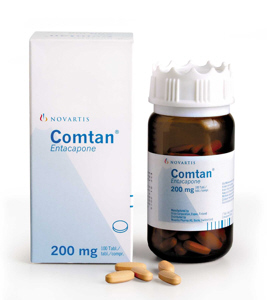 Two additional
studies have examined the switch between tolcapone and entacapone. Improvements
in ON time and reductions in OFF
time were approximately twice the magnitude for tolcapone than for entacapone. A
second study examining the switch from entacapone to tolcapone also suggested
that tolcapone has greater efficacy than entacapone. The authors suggest that
these findings indicate that tolcapone should be considered in all patients with
entacapone motor fluctuations. However, the authors do not mention that
tolcapone has demonstrated significant hepatotoxicity that limit it's
therapeutic utility to a drug of last resort. Entacapone has been a more popular
choice for supplementing the effects of L-Dopa because it causes fewer side
effects and lesser toxicity.
Two additional
studies have examined the switch between tolcapone and entacapone. Improvements
in ON time and reductions in OFF
time were approximately twice the magnitude for tolcapone than for entacapone. A
second study examining the switch from entacapone to tolcapone also suggested
that tolcapone has greater efficacy than entacapone. The authors suggest that
these findings indicate that tolcapone should be considered in all patients with
entacapone motor fluctuations. However, the authors do not mention that
tolcapone has demonstrated significant hepatotoxicity that limit it's
therapeutic utility to a drug of last resort. Entacapone has been a more popular
choice for supplementing the effects of L-Dopa because it causes fewer side
effects and lesser toxicity.
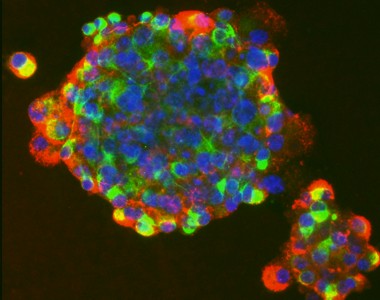 Possible medical benefits were considered more
important than the rights of the embryo in Spain, the Czech Republic, Sweden,
Denmark, France and the Netherlands. The rights of the embryos were considered
more important in the U.S.A., Austria, Ireland, Germany,
Poland, Japan and Israel. People in most countries accepted the use of spare
embryos left over from fertility treatments more than the use of embryos created
specifically for research. Most countries are against the use of hybrid embryos,
mostly because of the fear that the technique could get out of control and
because it could lead to dangerous uses.
For more information go to
the
Possible medical benefits were considered more
important than the rights of the embryo in Spain, the Czech Republic, Sweden,
Denmark, France and the Netherlands. The rights of the embryos were considered
more important in the U.S.A., Austria, Ireland, Germany,
Poland, Japan and Israel. People in most countries accepted the use of spare
embryos left over from fertility treatments more than the use of embryos created
specifically for research. Most countries are against the use of hybrid embryos,
mostly because of the fear that the technique could get out of control and
because it could lead to dangerous uses.
For more information go to
the
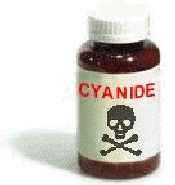 Hydrogen cyanide is contained in
vehicle exhaust and in tobacco smoke. The smoke of burning plastics contains
hydrogen cyanide, and house fires often result in cyanide poisonings. A deep
blue pigment called Prussian blue, used in the making of blueprints, is iron
(III) ferrocyanide. Cyanides are one of the very few soluble compounds of gold,
and thus are used in electroplating, gold mining, metallurgy and jewellery for
chemical gilding, buffing, and extraction of gold. Cyanides and hydrogen cyanide
are used in the production of chemicals, photographic development, making
plastics, fumigating ships, and some mining processes. Potassium Ferrocyanide is
used to achieve a blue colour on cast bronze sculptures during the final
finishing stage of the sculpture.
Hydrogen cyanide is contained in
vehicle exhaust and in tobacco smoke. The smoke of burning plastics contains
hydrogen cyanide, and house fires often result in cyanide poisonings. A deep
blue pigment called Prussian blue, used in the making of blueprints, is iron
(III) ferrocyanide. Cyanides are one of the very few soluble compounds of gold,
and thus are used in electroplating, gold mining, metallurgy and jewellery for
chemical gilding, buffing, and extraction of gold. Cyanides and hydrogen cyanide
are used in the production of chemicals, photographic development, making
plastics, fumigating ships, and some mining processes. Potassium Ferrocyanide is
used to achieve a blue colour on cast bronze sculptures during the final
finishing stage of the sculpture. 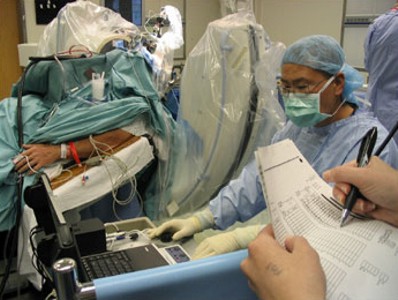 All patients but one displayed improvement following the
reimplantation. Assessed whilst not taking
Parkinson's Disease drugs, motor scores had been improved by 26% before
reimplantation, but by 59% after reimplantation. The average L-dopa dosage
after reimplantation was less than half of what it needed to be before
reimplantation. The threshold before any adverse effects were seen was
also improved. The mean distance from the theoretical target had been
reduced from 5.4 mm to 2.0 mm. The authors concluded that a poor response
to DBS surgery as a result of electrode misplacement can benefit a lot
from reimplantation closer to the theoretical target.
All patients but one displayed improvement following the
reimplantation. Assessed whilst not taking
Parkinson's Disease drugs, motor scores had been improved by 26% before
reimplantation, but by 59% after reimplantation. The average L-dopa dosage
after reimplantation was less than half of what it needed to be before
reimplantation. The threshold before any adverse effects were seen was
also improved. The mean distance from the theoretical target had been
reduced from 5.4 mm to 2.0 mm. The authors concluded that a poor response
to DBS surgery as a result of electrode misplacement can benefit a lot
from reimplantation closer to the theoretical target.
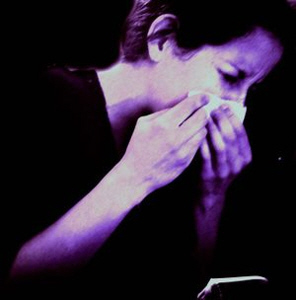 They found that rhinorrhea affects
about half of people with Parkinson's Disease, which is significantly more
than in people that do not have Parkinson's Disease. It was found to be an
early feature of Parkinson's Disease, being present at the time of
presentation. It was also associated with a self-perceived reduction in
the sense of smell, which raises the question of whether some olfactory
impairment found in Parkinson's Disease could be confounded by rhinorrhea,
and also whether rhinorrhea may be a premotor symptom. The association of
rhinorrhea with Parkinson's Disease is not explained by the researchers.
Rhinorrhea normally occurs as a symptom of the common cold and allergies.
So it's odd that they coincide to such an extent.
They found that rhinorrhea affects
about half of people with Parkinson's Disease, which is significantly more
than in people that do not have Parkinson's Disease. It was found to be an
early feature of Parkinson's Disease, being present at the time of
presentation. It was also associated with a self-perceived reduction in
the sense of smell, which raises the question of whether some olfactory
impairment found in Parkinson's Disease could be confounded by rhinorrhea,
and also whether rhinorrhea may be a premotor symptom. The association of
rhinorrhea with Parkinson's Disease is not explained by the researchers.
Rhinorrhea normally occurs as a symptom of the common cold and allergies.
So it's odd that they coincide to such an extent.
 The increased mortality risk was apparent even
in those people who'd had Parkinson's Disease for less than two years. The
risk levels remained stable with increasing duration. Even for those who
were 80 years old or older the death rate in Parkinson's Disease was
double that of people that did not have Parkinson's Disease. The risk of
mortality associated with Parkinson's Disease was not different according
to how much somebody smoked. Overall, people with Parkinson Disease had an
increased risk of all-cause mortality that was not affected by disease
duration or age of onset.
The increased mortality risk was apparent even
in those people who'd had Parkinson's Disease for less than two years. The
risk levels remained stable with increasing duration. Even for those who
were 80 years old or older the death rate in Parkinson's Disease was
double that of people that did not have Parkinson's Disease. The risk of
mortality associated with Parkinson's Disease was not different according
to how much somebody smoked. Overall, people with Parkinson Disease had an
increased risk of all-cause mortality that was not affected by disease
duration or age of onset.
 Publisher's
description : This diary reveals the day-to-day and year-to-year struggles
faced by those with Parkinson's
disease and their caregivers. Despite significant advances in our
understanding and treatment of Parkinson's disease, this graphic glimpse
into the effects of the disease emphasize the great need for more research
and better therapies, especially those with the potential to stop,
reverse, or at least slow its progression. Caregivers will find this book
to be a valuable source of information, strength, and inspiration. Jane
Awalt's book on her life as a caregiver for her husband Bob Awalt and his
battle with Parkinson's disease allows great insight into the disease and
its affect on both the patient and the family and the spouse.
Publisher's
description : This diary reveals the day-to-day and year-to-year struggles
faced by those with Parkinson's
disease and their caregivers. Despite significant advances in our
understanding and treatment of Parkinson's disease, this graphic glimpse
into the effects of the disease emphasize the great need for more research
and better therapies, especially those with the potential to stop,
reverse, or at least slow its progression. Caregivers will find this book
to be a valuable source of information, strength, and inspiration. Jane
Awalt's book on her life as a caregiver for her husband Bob Awalt and his
battle with Parkinson's disease allows great insight into the disease and
its affect on both the patient and the family and the spouse.
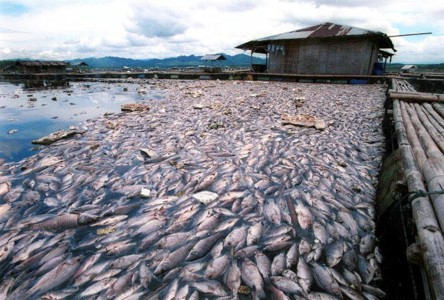 Serum concentrations of polychlorinated biphenyls (PCBs) and
other related
contaminants were slightly increased in Parkinson's Disease. Beta-hexachlorocyclohexane
(beta-HCH) was significantly related to Parkinson's Disease. In the Faeroe Islands,
increased intake of whale meat and blubber was significantly
associated with Parkinson's Disease, suggesting that their main source of
contamination had been from marine sources. Measures of occupational exposure to solvents, pesticides and metals also
suggested an increased risk for Parkinson's Disease.
Serum concentrations of polychlorinated biphenyls (PCBs) and
other related
contaminants were slightly increased in Parkinson's Disease. Beta-hexachlorocyclohexane
(beta-HCH) was significantly related to Parkinson's Disease. In the Faeroe Islands,
increased intake of whale meat and blubber was significantly
associated with Parkinson's Disease, suggesting that their main source of
contamination had been from marine sources. Measures of occupational exposure to solvents, pesticides and metals also
suggested an increased risk for Parkinson's Disease.  However,
the genetic form of
Parkinson's Disease,
the G2019S LRRK2 mutation, is up to
20 times more
common in Arabs than in Europeans
and North Americans,
suggesting that it originated there,
most probably many centuries ago. It is by far the most common form of
genetic Parkinson's Disease in Arabs, causing about 40% of genetic
Parkinson's Disease, in comparison to only 2%-3% in Europeans and North
Americans. Three other genetic forms of Parkinson's Disease have been
found in Arabs : Parkin, PINK1 and PARK9. The clinical features of
Parkinson's Disease in Arabs is not different from those
reported elsewhere.
Parkinsonism
was the commonest movement disorder founfamongst Arabs. Parkinson's
Disease was the cause of dementia in around 7% of Arabs.
However,
the genetic form of
Parkinson's Disease,
the G2019S LRRK2 mutation, is up to
20 times more
common in Arabs than in Europeans
and North Americans,
suggesting that it originated there,
most probably many centuries ago. It is by far the most common form of
genetic Parkinson's Disease in Arabs, causing about 40% of genetic
Parkinson's Disease, in comparison to only 2%-3% in Europeans and North
Americans. Three other genetic forms of Parkinson's Disease have been
found in Arabs : Parkin, PINK1 and PARK9. The clinical features of
Parkinson's Disease in Arabs is not different from those
reported elsewhere.
Parkinsonism
was the commonest movement disorder founfamongst Arabs. Parkinson's
Disease was the cause of dementia in around 7% of Arabs.
 Over 300 years before James
Parkinson formally described Parkinson's Disease, Leonardo da Vinci saw
people whose symptoms coincided with those seen in Parkinson's Disease. Leonardo wrote in
his notebooks that "you will see.....those who.....move their trembling
parts, such as their heads or hands without permission of the soul; (the)
soul with all its forces cannot prevent these parts from trembling." In a
translatiom of Da Vinci's notebooks "The movements of paralytics of those
benumbed by cold, whose head and members move without control of the soul,
who cannot stop the movements."
The combination of difficulty with
voluntary movement ("paraletici") and tremor ("tremanti') leave little
doubt of the diagnosis of Parkinson's Disease.
At the end of his life Leonardo was unable to
paint due to the loss of control of movement in his hands. It has been
suggested that, by then, Leonardo had the disorder himself.
Due to most of his notebooks
remaining secret for centuries, Leonardo did not receive any credit for
contributing to the recognition of Parkinson's Disease.
Over 300 years before James
Parkinson formally described Parkinson's Disease, Leonardo da Vinci saw
people whose symptoms coincided with those seen in Parkinson's Disease. Leonardo wrote in
his notebooks that "you will see.....those who.....move their trembling
parts, such as their heads or hands without permission of the soul; (the)
soul with all its forces cannot prevent these parts from trembling." In a
translatiom of Da Vinci's notebooks "The movements of paralytics of those
benumbed by cold, whose head and members move without control of the soul,
who cannot stop the movements."
The combination of difficulty with
voluntary movement ("paraletici") and tremor ("tremanti') leave little
doubt of the diagnosis of Parkinson's Disease.
At the end of his life Leonardo was unable to
paint due to the loss of control of movement in his hands. It has been
suggested that, by then, Leonardo had the disorder himself.
Due to most of his notebooks
remaining secret for centuries, Leonardo did not receive any credit for
contributing to the recognition of Parkinson's Disease.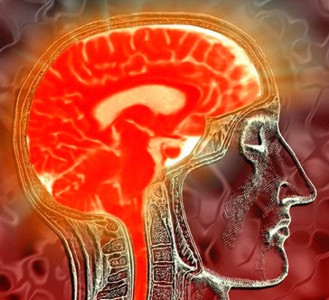 Tremor was produced by stimulating two parts of the
brain (the caudal zona incerta and the ventrolateral thalamocortical
neurons). Tremor was also seen following stimulation of the subthalamic
nucleus, but only after very high levels of stimulation. No tremor was
found after stimulating any other areas of the brain. The researchers
consequently claim that tremor originates primarily via the caudal zona
incerta and the ventrolateral thalamocortical neurons, instead of other
areas in the brain in which it was previously assumed that tremor
originated in Parkinson's Disease (in the cortico-ZI-VL-thalamocortical
loop rather than in the cortico-basal-ganglia-thalamocortical loop).
Tremor was produced by stimulating two parts of the
brain (the caudal zona incerta and the ventrolateral thalamocortical
neurons). Tremor was also seen following stimulation of the subthalamic
nucleus, but only after very high levels of stimulation. No tremor was
found after stimulating any other areas of the brain. The researchers
consequently claim that tremor originates primarily via the caudal zona
incerta and the ventrolateral thalamocortical neurons, instead of other
areas in the brain in which it was previously assumed that tremor
originated in Parkinson's Disease (in the cortico-ZI-VL-thalamocortical
loop rather than in the cortico-basal-ganglia-thalamocortical loop).