.gif) VIARTIS
|
||||||
|
PARKINSON'S DISEASE |
||||||
|
|
||||||
|
|
PARKINSON'S DISEASE NEWS
|
|
||||
|
JANUARY 2009 31st January 2009 - New clinical trial NEW GLUTAMATE ANTAGONIST CLINICAL TRIAL RESULTS Addex Pharmaceuticals have announced what they describe as "the successful completion" of Phase I studies of a newly developed modified release formulation of ADX48621. ADX48621 is a glutamate antagonist aimed at treating the dsykinesia caused in Parkinson's Disease by taking L-dopa. The study showed that the new formulation achieved satisfactory pharmacokinetics, safety and tolerability with single and repeat dose administration across the dose range planned to be used for the Phase II proof of concept study, which is expected to start later this year.
30th January 2009 - New research OMEGA-3 FATTY ACIDS REDUCE DEPRESSION IN PARKINSON'S DISEASE Journal of Affective Disorders [2008] 111 (2-3) :351-359 (da Silva TM, Munhoz RP, Alvarez C, Naliwaiko K, Kiss A, Andreatini R, Ferraz AC.) Complete abstract Omega-3 fatty acids are fatty acids that have numerous functions in the body, and that the body can not make itself. They are therefore like vitamins in that they must be obtained in the diet or in dietary supplements. Rapeseed oil (canola oil), which is used for frying and in salads is a commonly available source. One of the richest sources is fish oil. For more information go to Omega-3 fatty acids.
29th January 2009 - New research EARLY VERSUS DELAYED USE OF RASAGILINE Movement Disorders [2008] [Epub ahead of print] (Hauser RA, Lew MF, Hurtig HI, Ondo WG, Wojcieszek J, Fitzer-Attas CJ) Complete abstract Rasagiline is a MAO-B inhibitor. MAO-B inhibitors do not directly increase the formation of dopamine. Instead they increase dopamine levels by reducing its breakdown. The most common MAO-B inhibitors are Selegiline (Eldepryl) and Rasagiline (Azilect). MAO-B inhibitors cause widespread side effects. The purpose of this study, involving over 400 patients, was to assess whether it was better to begin the use of Rasagiline in Parkinson's Disease early, or whether it was better to delay its use.
28th January 2009 - New research PARKINSON'S DISEASE IN TWINS Neurobiology of Aging [2008] 29 (12) : 1765-1773 (Wirdefeldt K, Gatz M, Bakaysa SL, Fiske A, Flensburg M, Petzinger GM, Widner H, Lew MF, Welsh M, Pedersen NL.) Complete abstract It is claimed by some people that Parkinson's Disease is genetic - not merely that genetic mutations can lead to Parkinson's Disease in some people, which does occur, but that Parkinson's Disease occurs far more commonly when somebody has a close relative who has Parkinson's Disease. Genetically, twins are the closest of all relatives. This study assessed how commonly Parkinson's Disease occurred in both twins. Nearly 50,000 twins were assessed. Out of those, 132 people were found to have Parkinson's Disease. Over 7% of cases reported a first degree relative with Parkinson's Disease.
26th January 2009 - New clinical trial NEW CLINICAL TRIAL OF GENE THERAPY The primary fault in Parkinson's Disease is the insufficient formation of dopamine. It has been claimed that, in Parkinson's Disease, there is also insufficient formation of GABA. Both dopamine and GABA are involved in muscular movement. However, increasing dopamine formation or activity, by various means, has always proven to be the most effective method of treatment. Neurologix believe that increasing the formation of GABA may be a more effective approach. For more information go to the News release.
GDNF was a previous method of using gene therapy in Parkinson's Disease. However, although claimed as curative by some, in large scale clinical trials it was shown to have no effect at all in ridding Parkinson's Disease. There is no evidence that reduced GABA formation causes Parkinson's Disease anyway. Instead, reduced GABA is sometimes merely associated with Parkinson's Disease. The formation of GABA can be increased more readily by taking the supplements glutamic acid and pyridoxine (vitamin B6), because these are what GABA is made from.
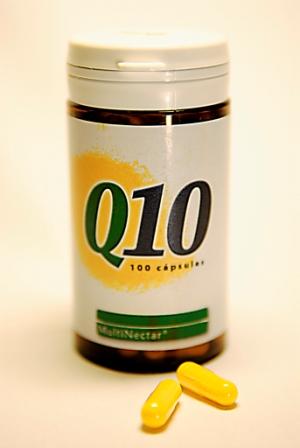
25th January 2009 - New clinical trial CLINICAL TRIAL OF COENZYME Q10 A large new clinical trial involving 600 patients is being arranged in order to assess the efficacy of Coenzyme Q10 in Parkinson's Disease. Patients are still able to enrol in the clinical trial. For the full details go to the Clinical trial study. Coenzyme Q10 is essential for the proper functioning of the mitochondria.
23rd January 2009 - New research HEAD INJURY AS A CAUSE OF
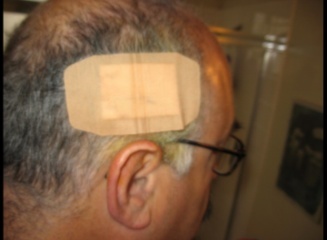
PARKINSON'S DISEASE Head injury is often claimed as a cause of initiating symptoms of Parkinson's Disease. Researchers assessed the prevalence of head injury in people with Parkinson's Disease in comparison to other people of a comparable age and gender. People were assessed for their hospital visits for head injuries. This is the largest study there has ever been of this kind.
Severe head injuries make Parkinson's Disease even more likely, except when those injuries are caused by fractured skulls or intracranial haemorrhage. The authors suggest that the effect of head injury on Parkinson's Disease must be rapid. However, instead of cell death causing symptoms, they suggest that head injuries damage the blood-brain barrier, thereby exposing the brain to various damaging factors.
17th January 2009 - New research THE CARERS VERY DIFFERENT VIEW OF PARKINSON'S DISEASE SYMPTOMS Aging and Mental Health [2008] 12 (5): 647-653 (McKinlay A, Grace RC, Dalrymple-Alford
JC, Anderson TJ, Fink J, Roger D.)
Complete abstract
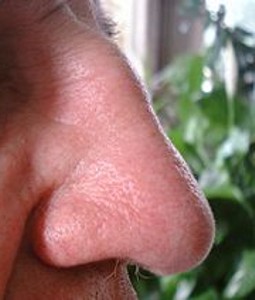
16th January 2009 - New research loss of sense of smell in parkinson's diseaseParkinsonism Related Disorders [2009] Jan 10. [Epub ahead of print] (Haehner A, Boesveldt S, Berendse HW, Mackay-Sim A, Fleischmann J, Silburn PA, Johnston AN, Mellick GD, Herting B, Reichmann H, Hummel T.) Complete abstract
Substances commonly used to assess the sense of smell are fresh coffee, lemons, garlic, cinnamon. If somebody can not smell them at at all they have anosmia. If they can be smelt, but only mildly, somebody would have hyposmia. If the smell of any of these is very strong, then somebody's sense of smell is fully functional.
14th January 2009 - News release michael j.fox foundation funds six new approachesThe Michael J.Fox Foundation is funding six new approaches for Parkinson's Disease. Two of the projects are assessing the effects of drugs that are normally used for other medical disorders. One team will investigate the potential of Simvastatin (a drug currently used to treat high cholesterol) to reduce dyskinesia in Parkinson's Disease. For more information go to the full details. Another team will assess the effect of Isradipine (a drug for high blood pressure) in its ability to relieve dopamine producing neurons from degeneration that occurs in Parkinson�s Disease. For more information go to the full details. The biochemistry of these two drugs is completely unrelated to Parkinson's Disease. The Foundation does admit that these approaches seem irrelevant to Parkinson's Disease, but claim that preclinical studies suggest that they might be beneficial.
The front page of the Michael
J.Fox Foundation web site claims "We don't just fund research. We fund results."
However, despite their good intentions, none of their numerous projects have
ever resulted in anyone ever being rid of Parkinson's Disease. This is largely
because of the faulty scientific basis on which their projects have been based. 10th January 2009 - New research using lasers with Parkinson's DiseaseJournal of Biological Chemistry [2009] 284 (2) : 1009-1017 (Ozawa D, Yagi H, Ban T, Kameda A, Kawakami T, Naiki H, Goto Y.) Complete abstract Alpha-synuclein
is an element in the cells whose accumulation and toxic effects have been
claimed to be a cause of Parkinson's Disease.
For more
information go to
Alpha-Synuclein.
Researchers have been observing the formation
There are people with Parkinson's Disease that have no accumulation of alpha-synuclein, and people who have accumulated alpha-synuclein who do not have Parkinson's Disease. So ridding alpha-synuclein does not mean ridding Parkinson's Disease. Alpha-synuclein is a damaging element of cells that appears to be as a result of Parkinson's Disease rather than a cause of Parkinson's Disease.
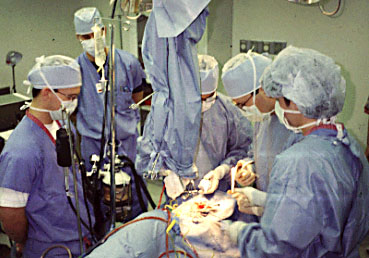
7th January 2009 - New research the assessment of deep brain surgery for Parkinson's DiseaseThe Journal of the American Medical Association [2009] 301 (1) : 63-73 Frances M. Weaver, Kenneth Follett, Matthew Stern, Kwan Hur, Crystal Harris, William J. Marks Jr, Johannes Rothlind, Oren Sagher, Domenic Reda, Claudia S. Moy, Rajesh Pahwa, Kim Burchiel, Penelope Hogarth, Eugene C. Lai, John E. Duda, Kathryn Holloway, Ali Samii, Stacy Horn, Jeff Bronstein, Gatana Stoner, Jill Heemskerk, Grant D. Huang) Complete abstract Deep brain stimulation (DBS) is a method of treatment for advanced Parkinson's Disease. It involves the use of electrodes that are implanted into the brain and connected to a small electrical device called a pulse generator that can be externally programmed. For more information go to Deep brain stimulation. There were few randomized clinical trials comparing treatments, and most of those studies did not include older patients.
3rd January 2009 - New research the overdiagnosis of Parkinson's DiseaseMovement Disorders 2008 Dec 31; [Epub ahead of print] (Marshall VL, Reininger CB, Marquardt M, Patterson J, Hadley DM, Oertel WH, Benamer HT, Kemp P, Burn D, Tolosa E, Kulisevsky J, Cunha L, Costa D, Booij J, Tatsch K, Chaudhuri KR, Ulm G, Pogarell O, Hoffken H, Gerstner A, Grosset DG.) Complete abstract Faulty diagnosis of Parkinson's Disease is a
frequent problem. The textbook descriptions of Parkinson's Disease are not what
is commonly seen in practice, because people with Parkinson's Disease can differ
considerably regarding
Tremor is often wrongly assumed to indicate Parkinson's Disease, even though around 30% of people with Parkinson's Disease don't have tremor. Tremor occurs in a diversity of medical conditions that have nothing to do with Parkinson's Disease. Faulty diagnosis can also occur because there are other medical disorders whose symptoms overlap with those of Parkinson's Disease. For more information go to Parkinsonism. Most drugs used to treat Parkinson's Disease can cause an after effect that simulate Parkinson's Disease to such an extent that Parkinson's Disease drugs can end up being the primary cause of Parkinson's Disease symptoms. So somebody who is wrongly diagnosed with Parkinson's Disease can end up with Parkinson's Disease symptoms because of the same drugs that are aimed at ridding a medical disorder that they did not actually have to begin with.
2nd January 2009 - New book Therapeutics of Parkinson's Disease and Other Movement DisordersMark Hallet (Editor), Werner Poewe (Co-Editor)
|
||||||
.gif) |
||||||
| �2006-2008 Viartis | ||||||
| [email protected] | ||||||
 Although Addex have described the clinical trials as
successful, Phase I clinical trials do not involve people with the medical disorder. So nobody with Parkinson's
Disease was actually involved in the clinical trial. For the full details go to
the
Although Addex have described the clinical trials as
successful, Phase I clinical trials do not involve people with the medical disorder. So nobody with Parkinson's
Disease was actually involved in the clinical trial. For the full details go to
the
 The effect of fish oil
supplements was assessed for the first time in people with Parkinson's Disease
who suffered from serious depression. Patients were given fish oil (containing
omega-3 fatty acids) for three months and were matched against a placebo group.
On two of the three depression scales used, patients taking omega-3 fatty acids
significantly reduced their depression. Omega-3 fatty acid levels in their body
also increased in response to the supplements. The study does not state the
means by which the Omega-3 fatty acids helped to reduce depression. Omega-3
fatty acids are not directly involved in forming dopamine. They probably act by
forming prostaglandins, which are hormone like substances that have numerous
biological functions.
The effect of fish oil
supplements was assessed for the first time in people with Parkinson's Disease
who suffered from serious depression. Patients were given fish oil (containing
omega-3 fatty acids) for three months and were matched against a placebo group.
On two of the three depression scales used, patients taking omega-3 fatty acids
significantly reduced their depression. Omega-3 fatty acid levels in their body
also increased in response to the supplements. The study does not state the
means by which the Omega-3 fatty acids helped to reduce depression. Omega-3
fatty acids are not directly involved in forming dopamine. They probably act by
forming prostaglandins, which are hormone like substances that have numerous
biological functions.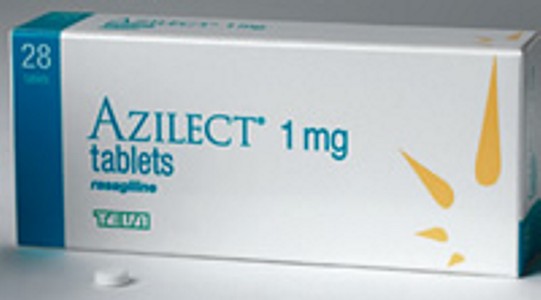 Those patients that began Rasagiline
earlier were found to have lesser symptoms
after every one of the time periods that was assessed (from six months to longer
than five years). However, The study does not appear to have assessed whether
worse side effects were experienced due to beginning Rasagiline earlier, or if
higher dosages of Rasagiline were eventually needed in order to sustain the
better effects seen due to starting Rasagiline earlier.
Those patients that began Rasagiline
earlier were found to have lesser symptoms
after every one of the time periods that was assessed (from six months to longer
than five years). However, The study does not appear to have assessed whether
worse side effects were experienced due to beginning Rasagiline earlier, or if
higher dosages of Rasagiline were eventually needed in order to sustain the
better effects seen due to starting Rasagiline earlier.  However, only three of those people with Parkinson's
Disease were found to be pairs of twins. This made the likelihood
of both twins developing Parkinson's Disease very small. It completely
contradicts the notion that Parkinson's Disease occurs far more commonly amongst
close relatives. Besides relatives passing on their genes, they often pass on
aspects of their lifestyle. Lifestyle similarities rather than genetics would better explain more than
one person within the same family having Parkinson's Disease.
However, only three of those people with Parkinson's
Disease were found to be pairs of twins. This made the likelihood
of both twins developing Parkinson's Disease very small. It completely
contradicts the notion that Parkinson's Disease occurs far more commonly amongst
close relatives. Besides relatives passing on their genes, they often pass on
aspects of their lifestyle. Lifestyle similarities rather than genetics would better explain more than
one person within the same family having Parkinson's Disease.
 Neurologix are to carry out a clinical trial using
a gene therapy that aims at increasing the formation of GABA. They intend
doing this by increasing the quantity of GAD (Glutamic Acid Decarboxylase). GAD
is what the brain uses naturally in order to make GABA. Participants will
receive an infusion of the gene-based treatment via a catheter temporarily
placed in their subthalamic nucleus. This part of the brain is the main surgical
target in treating Parkinson's disease. For the full details of the clinical
trial go to the
Neurologix are to carry out a clinical trial using
a gene therapy that aims at increasing the formation of GABA. They intend
doing this by increasing the quantity of GAD (Glutamic Acid Decarboxylase). GAD
is what the brain uses naturally in order to make GABA. Participants will
receive an infusion of the gene-based treatment via a catheter temporarily
placed in their subthalamic nucleus. This part of the brain is the main surgical
target in treating Parkinson's disease. For the full details of the clinical
trial go to the
 The
The
 There was a 50% increase in the prevalence of hospital
visits for head injury in people with Parkinson's Disease. However, this linking
of head injury and Parkinson's Disease was only found when the head injuries occurred in the
three month period before Parkinson's Disease symptoms first occurred. The link
between head
injuries and Parkinson's Disease during this period steeply increased. However,
head injuries four months or longer before symptoms
first occurred were found to be largely unrelated to initiating Parkinson's
Disease. Head injuries years before symptoms began were found to be of little
significance.
There was a 50% increase in the prevalence of hospital
visits for head injury in people with Parkinson's Disease. However, this linking
of head injury and Parkinson's Disease was only found when the head injuries occurred in the
three month period before Parkinson's Disease symptoms first occurred. The link
between head
injuries and Parkinson's Disease during this period steeply increased. However,
head injuries four months or longer before symptoms
first occurred were found to be largely unrelated to initiating Parkinson's
Disease. Head injuries years before symptoms began were found to be of little
significance.  The level of
agreement
between the two groups was very low, with only 46% agreement for depression, 45%
for apathy, 29% for hallucinations, 27% for sleep problems and 7% for anxiety.
Given this low level of agreement between self and other report, these two
methods of assessment cannot be considered interchangeable. It really does
matter whether or not it is the patient or the relative or carer who answers
questions concerning a person's symptoms, because they have very different
perceptions of them.
The level of
agreement
between the two groups was very low, with only 46% agreement for depression, 45%
for apathy, 29% for hallucinations, 27% for sleep problems and 7% for anxiety.
Given this low level of agreement between self and other report, these two
methods of assessment cannot be considered interchangeable. It really does
matter whether or not it is the patient or the relative or carer who answers
questions concerning a person's symptoms, because they have very different
perceptions of them.
 Reduced sense of smell is a well established symptom of Parkinson's Disease. The
number of people with Parkinson's Disease that were thought to be affected in
this way has ranged from 45% to 90%. The present study
was
the largest of its kind, assessing 400 patients in three different countries.
They used "Sniffin' Sticks" to assess patients, who underwent a psychophysical olfactory
test that is comprised of 3 subtests of olfactory function. Out of the total number of patients, 45% were found to have anosmia (a complete loss of sense of smell). Nearly 52% were found to have
hyposmia (a greatly reduced sense of smell). Only 3% of people with Parkinson's
Disease (a mere 1 in 33) had a normal sense of smell. This means that a greatly
reduced sense of smell in Parkinson's Disease is far more common than tremor,
which occurs in only 70% of people with Parkinson's Disease.
Reduced sense of smell is a well established symptom of Parkinson's Disease. The
number of people with Parkinson's Disease that were thought to be affected in
this way has ranged from 45% to 90%. The present study
was
the largest of its kind, assessing 400 patients in three different countries.
They used "Sniffin' Sticks" to assess patients, who underwent a psychophysical olfactory
test that is comprised of 3 subtests of olfactory function. Out of the total number of patients, 45% were found to have anosmia (a complete loss of sense of smell). Nearly 52% were found to have
hyposmia (a greatly reduced sense of smell). Only 3% of people with Parkinson's
Disease (a mere 1 in 33) had a normal sense of smell. This means that a greatly
reduced sense of smell in Parkinson's Disease is far more common than tremor,
which occurs in only 70% of people with Parkinson's Disease. The
Foundation is funding four other projects, including three new types of drug.
For more information go to the
The
Foundation is funding four other projects, including three new types of drug.
For more information go to the
 of
amyloid proteins - a group of substances that includes alpha-synuclein - using a
fluorescence dye
that is specific for amyloid. They found
that a technique used to visualize amyloid under experimental conditions, might
also have clinical potential. The same lasers would be used to destroy the
amyloid proteins by inhibiting their growth and degrading them. They found that
under the right conditions, the laser could actually stop amyloid fiber growth
and even degrade the amyloids.
of
amyloid proteins - a group of substances that includes alpha-synuclein - using a
fluorescence dye
that is specific for amyloid. They found
that a technique used to visualize amyloid under experimental conditions, might
also have clinical potential. The same lasers would be used to destroy the
amyloid proteins by inhibiting their growth and degrading them. They found that
under the right conditions, the laser could actually stop amyloid fiber growth
and even degrade the amyloids.
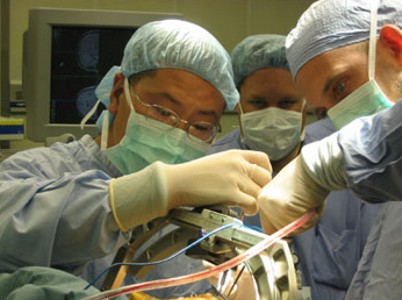 Consequently,
researchers
compared the use of DBS with the best medical alternatives. Patients who were
using DBS gained an average of 4.6 hours "on" time without it causing
dyskinesia. Movement symptoms improved in more people using DBS - 71% of them in
comparison to 32% that were not using DBS. Those people using DBS experienced
significant improvements in the quality of life. However, patients using DBS had
nearly 4 times the risk of experiencing a serious adverse event. The most common
serious adverse event was surgical site infection, with other serious adverse
events including nervous system disorders, psychiatric disorders, device-related
complications and cardiac disorders.
Consequently,
researchers
compared the use of DBS with the best medical alternatives. Patients who were
using DBS gained an average of 4.6 hours "on" time without it causing
dyskinesia. Movement symptoms improved in more people using DBS - 71% of them in
comparison to 32% that were not using DBS. Those people using DBS experienced
significant improvements in the quality of life. However, patients using DBS had
nearly 4 times the risk of experiencing a serious adverse event. The most common
serious adverse event was surgical site infection, with other serious adverse
events including nervous system disorders, psychiatric disorders, device-related
complications and cardiac disorders.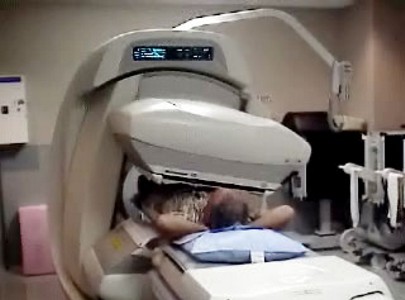 their
symptoms. In a European study, people taking part in clinical
trials who had been diagnosed with early
Parkinson's Disease had their clinical diagnosis
compared with the results from an assessment using SPECT imaging. SPECT imaging
can give a near certainty of diagnosis that is far more reliable than a
diagnosis based on questions and observations. Up to 15% of patients were found
to have been wrongly diagnosed with Parkinson's Disease. In the U.S.A.
misdiagnosis of Parkinson's Disease is even more common, with up to 25% of
people who are diagnosed with Parkinson's Disease not actually having it.
their
symptoms. In a European study, people taking part in clinical
trials who had been diagnosed with early
Parkinson's Disease had their clinical diagnosis
compared with the results from an assessment using SPECT imaging. SPECT imaging
can give a near certainty of diagnosis that is far more reliable than a
diagnosis based on questions and observations. Up to 15% of patients were found
to have been wrongly diagnosed with Parkinson's Disease. In the U.S.A.
misdiagnosis of Parkinson's Disease is even more common, with up to 25% of
people who are diagnosed with Parkinson's Disease not actually having it. 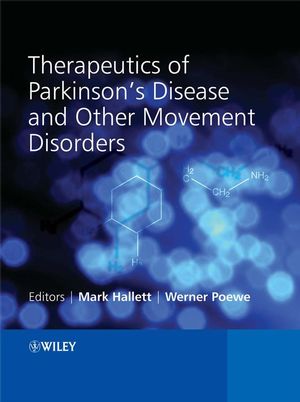 Publisher's
description : Provides a comprehensive update on therapies for Parkinson�s
disease and other movement disorders. Describes the basic mechanisms of
neurodegeneration, pharmacologic interventions for motor and non-motor symptoms,
and surgical management. Features summary tables and algorithms that serve as a
quick reference guide for practical treatment decisions. This is the only
current book on movement disorders to emphasize treatment. The authors, experts
in their field, have used evidence from randomized controlled clinical trials to
develop practical recommendations for every day clinical practice, bringing
their personal clinical acumen and therapeutic wisdom to the book.
Publisher's
description : Provides a comprehensive update on therapies for Parkinson�s
disease and other movement disorders. Describes the basic mechanisms of
neurodegeneration, pharmacologic interventions for motor and non-motor symptoms,
and surgical management. Features summary tables and algorithms that serve as a
quick reference guide for practical treatment decisions. This is the only
current book on movement disorders to emphasize treatment. The authors, experts
in their field, have used evidence from randomized controlled clinical trials to
develop practical recommendations for every day clinical practice, bringing
their personal clinical acumen and therapeutic wisdom to the book.